FTSE 100 FINISH LINE 6/5/26
FTSE 100 FINISH LINE 6/5/26
London’s FTSE 100 steadied on Wednesday, May 6, taking support from a broader recovery across global markets as investors grew more hopeful that progress toward a U.S.-Iran deal could reduce the immediate geopolitical risk premium. After Tuesday’s sharp HSBC-led decline, the UK benchmark was no longer trading in isolation: improving global risk appetite helped stabilise equities, softened the defensive tone, and encouraged investors to reassess whether the recent oil-driven inflation scare had gone too far. The move was not an aggressive FTSE rally, but it was an important change in tone — from liquidation to tentative recovery — as markets began pricing a lower probability of prolonged Middle East disruption.
The key macro driver was the possibility that a diplomatic breakthrough between Washington and Tehran could ease pressure on crude prices, reduce inflation anxiety and give central banks more room to remain patient. That mattered especially for UK assets, because the FTSE had been punished by the uncomfortable combination of higher oil, sticky inflation fears and doubts over the Bank of England’s policy path. Deal hopes helped reverse part of that logic: if the geopolitical premium in energy fades, the UK’s vulnerability to imported inflation becomes less acute, gilt markets can stabilise, and equity investors have more reason to look through near-term earnings noise.
Even so, London’s recovery remained less convincing than the global bounce. HSBC continued to act as a major overhang after its disappointing update triggered heavy selling in the previous session, and the banking complex remained sensitive to questions around margins, credit quality and the post-BoE rates outlook. That limited the FTSE’s ability to fully participate in the broader risk-on move. In other words, global markets were recovering on geopolitics, but the UK index still had to digest stock-specific damage from one of its largest constituents.
The oil trade also became more nuanced. Earlier in the week, rising crude had been treated as a threat to UK macro stability rather than a clean tailwind for energy producers. On Wednesday, hopes of a U.S.-Iran agreement helped shift the market away from worst-case supply-disruption scenarios. That reduced the inflation shock narrative and supported global equities, but it also meant energy names were less likely to provide the same automatic index support they had during oil-price spikes. For the FTSE, that created a mixed setup: lower geopolitical risk was positive for sentiment, but softer oil-risk premia could also reduce one of the index’s recent sources of defensive support.
Politically, the improvement in global sentiment gave Prime Minister Keir Starmer’s government some breathing room, because a de-escalation in the U.S.-Iran conflict would ease pressure on energy security, household costs and the Bank of England. But the UK risk discount has not disappeared. Investors remain alert to whether the recent shock leaves lasting damage through higher inflation expectations, weaker consumer confidence or tighter financial conditions. The finish line for May 6 is therefore sharper: the FTSE 100 stabilised because global markets recovered on U.S.-Iran deal hopes, but London’s rebound was capped by HSBC weakness and the lingering question of whether lower geopolitical risk will translate into real relief for the UK economy.
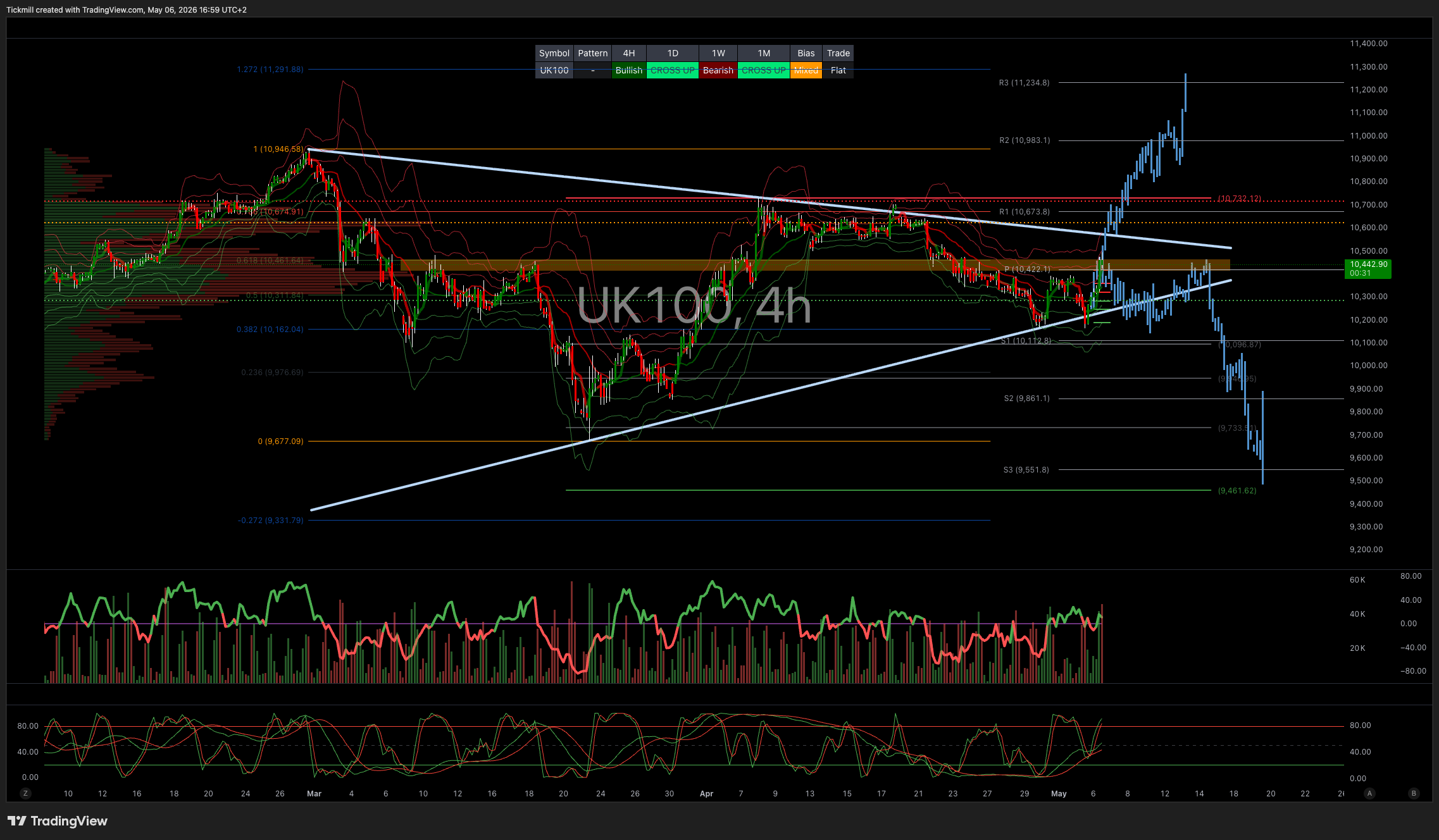
TECHNICAL & TRADE VIEW – FTSE100
Daily VWAP Bearish
Weekly VWAP Bearish
Above 10500 Target 11000
Below 10100 Target 9469
Disclaimer: The material provided is for information purposes only and should not be considered as investment advice. The views, information, or opinions expressed in the text belong solely to the author, and not to the author’s employer, organization, committee or other group or individual or company.
Past performance is not indicative of future results.
High Risk Warning: CFDs are complex instruments and come with a high risk of losing money rapidly due to leverage. 68% and 74% of retail investor accounts lose money when trading CFDs with Tickmill UK Ltd and Tickmill Europe Ltd respectively. You should consider whether you understand how CFDs work and whether you can afford to take the high risk of losing your money.
Futures and Options: Trading futures and options on margin carries a high degree of risk and may result in losses exceeding your initial investment. These products are not suitable for all investors. Ensure you fully understand the risks and take appropriate care to manage your risk.
Patrick has been involved in the financial markets for well over a decade as a self-educated professional trader and money manager. Flitting between the roles of market commentator, analyst and mentor, Patrick has improved the technical skills and psychological stance of literally hundreds of traders – coaching them to become savvy market operators!